Introduction
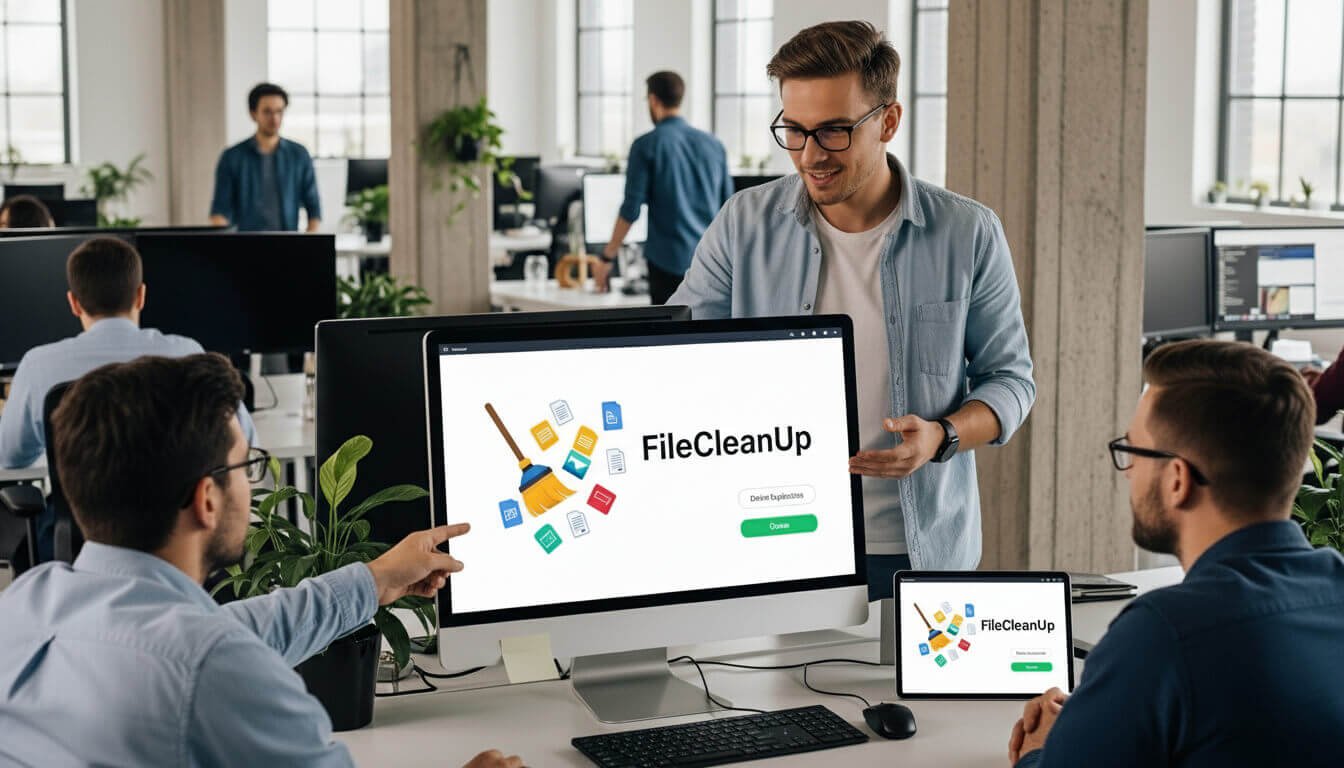
A Software Development Company has created an application called FileCleanUp. But what exactly is FileCleanUp, why does it matter, and is it safe to use? In this article, we’ll explain everything in plain language — what the app does, how it works, real-world benefits and risks, and practical steps to use it safely.
You’ll learn how FileCleanUp fits into routine device maintenance, what security and privacy to expect, and how to decide whether this type of tool is right for your home PC, business fleet, or developer workflow.
What is FileCleanUp?
FileCleanUp is a utility application built to identify and remove unnecessary files from computers and devices. It targets temporary files, caches, installation leftovers, duplicate files, and other clutter that slows systems down or eats storage.
In short, FileCleanUp aims to make devices faster and storage more efficient by cleaning safely and intelligently.
Who built FileCleanUp?
A Software Development Company has created FileCleanUp as a commercial or freemium product. Typically, such companies include product pages, support documentation, and regular updates. If you’re considering FileCleanUp, check that the publisher lists contact details, privacy policy, and update logs.
Core features of FileCleanUp
Smart cleanup engine
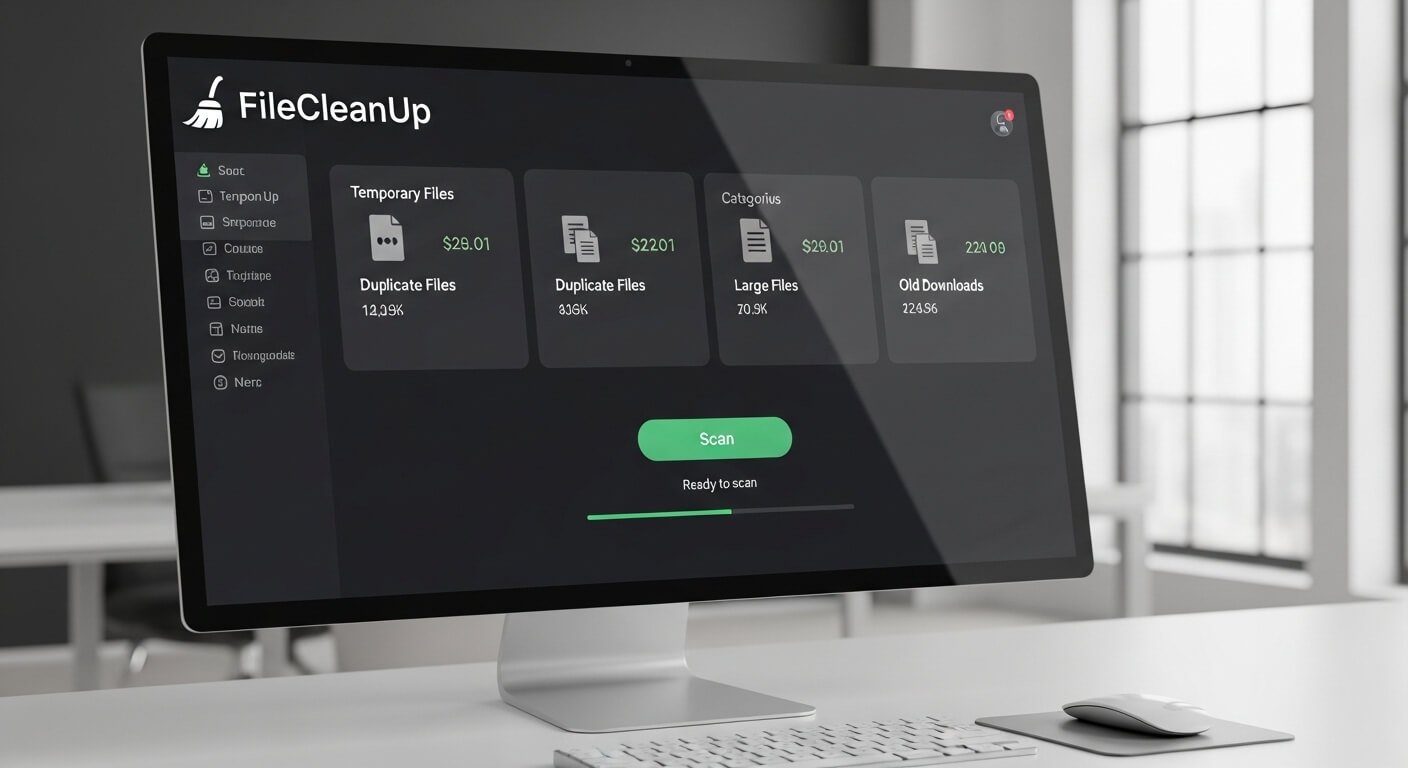
FileCleanUp scans system folders, browser caches, temporary directories, and common app caches to suggest safe removals.
Duplicate finder
It detects duplicate files using checksums rather than just filenames to avoid accidental deletion.
Large-file analyzer
Shows the biggest files on the drive so users can decide what to archive or delete.
Unused app/uninstaller helper
Helps identify apps that haven’t been used in months and provides clean uninstall steps.
Secure file shredding (optional)
Some versions overwrite deleted files, so they can’t be recovered — important for privacy.
Why tools like FileCleanUp are useful
- Faster performance: Less clutter often means quicker file indexing and faster boot times.
- More storage space: Removing installers and duplicates frees up space.
- Better organization: A big-picture view helps users manage archives and backups.
- Security and privacy: Secure deletion can reduce risk from resold hardware or shared machines.
How FileCleanUp works (simple breakdown)
-
Scan: The app maps file types and sizes across folders.
-
Analyze: It flags candidates for cleanup and groups them by risk level.
-
Recommend: It shows suggestions (safe, review-required, risky).
-
Action: User confirms deletion or chooses secure shred/archive.
-
Log: A cleanup log records what was removed for audit or rollback.
FileCleanUp in different environments
Home users
A casual user can remove browser caches, leftover installers, and temporary files to reclaim space quickly.
Small businesses
FileCleanUp can run on several workstations to standardize maintenance and reduce helpdesk tickets.
IT departments
Deployed centrally, it can support scheduled cleanups and compliance-related secure deletion.
Safety and privacy considerations
A Software Development Company has created FileCleanUp with features that can impact privacy. Therefore:
-
Always read the privacy policy to see what data the app collects.
-
Prefer applications that process scans locally rather than uploading file lists to remote servers.
-
If secure-shred is available, confirm the overwrite standard (single pass vs. multiple passes). NIST guidance on media sanitization (SP 800-88) is a useful reference. (See NIST SP 800-88 for secure data disposal recommendations.)
FileCleanUp vs built-in OS tools
Most operating systems include basic cleanup functions — Disk Cleanup on Windows or “Manage Storage” on macOS. FileCleanUp’s advantage is deeper analysis, user-friendly duplicate detection, and optional secure shredding.
However, built-in tools often have tighter OS integration and lower risk. Use third-party tools carefully and only from reputable developers.
How to evaluate the Software Development Company behind FileCleanUp
Before installing, check these signals of trustworthiness:
-
Website and documentation: Clear company name, address, support channels.
-
Update history: Frequent security and feature updates indicate active maintenance.
-
Independent reviews: Coverage on reputable tech sites or community forums.
-
Code transparency: Open-source components or documentation of security practices.
-
Payment & licensing clarity: Avoid opaque subscription terms.
Installation checklist (safe approach)
-
Download from the official vendor page or a trusted app store.
-
Verify digital signatures or checksums if provided.
-
Read permissions requested during installation.
-
Create a system restore point or full backup before running major cleanups.
-
Run an initial scan in “review” mode — do not auto-delete.
Best practices for using FileCleanUp
-
Review suggestions before deletion. Automation can be helpful, but human review prevents accidents.
-
Keep regular backups. Cleanups are not a substitute for backups.
-
Use staging/unattended runs for fleets with careful logs and rollback plans.
-
Document your cleanup policy for teams (what to delete, retention rules).
-
Prefer local processing — avoid apps that upload entire file lists to cloud services unless necessary and clearly explained.
Risks and common mistakes
-
Deleting something important (e.g., an unpacked installer that you need).
-
Overreliance on automatic “recommended” cleanups.
-
Choosing insecure or untrusted vendors that might exfiltrate metadata.
-
Not verifying secure deletion claims; single-pass overwrites are weaker than standards like NIST SP 800-88, multiple-pass recommendations for some threat models.
Regulatory & compliance notes
If you’re in a regulated industry, file deletion has legal implications. For example:
-
Personal data deletion must align with privacy laws such as GDPR in the EU.
-
Secure erasure may be required for decommissioning drives containing regulated information.
Always consult legal or compliance teams before running irreversible secure shred across regulated datasets.
Real-world examples and case uses
Freelancer reclaiming disk space
A designer used FileCleanUp to remove old project caches and recovered 120 GB of space — this helped keep a laptop usable during travel.
Small firm standardizing workstations
An accounting office deployed a scheduled cleanup that reduced support calls about sluggish machines.
(Examples are illustrative; results vary.)
How to measure FileCleanUp’s effectiveness
Use these KPIs:
-
Storage reclaimed (GB) after cleanup.
-
Time to boot or app launch before vs after.
-
Number of support tickets related to disk space or performance.
-
False positive rate — how often important files were flagged.
Track metrics over several runs before judging ROI.
Alternatives to FileCleanUp
Consider built-in OS options and well-known third-party tools:
-
Windows Disk Cleanup/Storage Sense
-
macOS Storage Management and built-in optimization options
-
Established third-party tools from reputable vendors (choose those with verifiable histories)
Evaluate alternatives on security, transparency, and support.
Future features to look for
Good FileCleanUp-like tools will evolve with:
-
AI-powered classification to better distinguish temporary vs. user data.
-
Cloud-aware cleanup for hybrid storage (local + cloud sync).
-
Policy-driven automated cleanups for enterprise compliance.
-
Improved audit logs and rollback features for safer operations.
Conclusion — Should you use FileCleanUp?
A Software Development Company has created an application called FileCleanUp to simplify storage management. For most users, such a tool offers real benefits: reclaiming storage, improving speed, and simplifying maintenance. However, weigh benefits against risks: prefer reputable vendors, do backups, and verify secure-deletion claims if you handle sensitive data.
If you follow simple precautions — download from official sources, review suggestions, and keep backups — FileCleanUp-style tools can be a helpful addition to your toolkit.
Quick checklist: Safe FileCleanUp Routine
-
Download from the official site or a trusted store.
-
Verify signatures/checksums.
-
Backup before running.
-
Run scans in “review” mode first.
-
Use secure-shred only when necessary and verify the method.
-
Keep the application updated.
-
Maintain logs of actions on business machines.
Frequently Asked Questions (FAQs)
Q1. What exactly does FileCleanUp remove?
A1. It targets temporary files, browser caches, app caches, installer leftovers, duplicate files, and optionally overwrites deleted files for secure disposal.
Q2. Is FileCleanUp free to use?
A2. Many such tools offer freemium models: basic cleanup is free; advanced features (automated scheduling, secure shredding, enterprise deployment) are paid.
Q3. Can FileCleanUp recover accidentally deleted files?
A3. If you used Secure Shred, recovery is unlikely. If you simply deleted without shredding, file-recovery tools may work—so keep backups.
Q4. Is it safe for business use?
A4. Yes, if deployed with policies: backups, staging tests, user permissions, and logged operations. For regulated data, coordinate with compliance teams.
Q5. How often should I run FileCleanUp?
A5. For most users, monthly checks plus quick scans when storage drops below a threshold (e.g., 10–15% free) works well. Enterprises often schedule based on policies.
Q6. Does FileCleanUp improve performance?
A6. It can improve perceived performance by reducing clutter, speeding up indexing and backups, and preventing disk-full slowdowns.